Fight-or-flight response (acute stress response) is a psychological reaction to a perceived harmful event, attack or threat to survival. This system helped our hunter/gatherer ancestors as a method of survival. For example, when exposed to a life-threatening situation, such as hungry predator attack, nerve signals from sensory organs (eyes, ears) would be sent to the brain. This would activate different bodily processes to enable a fast boost to the body and the man would have been ready to confront the predator or run form it.
What about human in modern times?
Some stress taking place in a moderate manner or in short bursts, can be beneficial to us living in modern times. It helps us get up from bed in the morning, overcome difficult encounters, get excited over a first date or a trip, or excel in sports and competitions. On these occasions, our bodies can quickly return to normal state with no adverse effects on our health or well-being.
The issue is with fight-or-flight response being activated repeatedly and during prolonged periods. As our daily input increases, mental activities we expose ourselves to, a more permanent fight-or-flight response occurs, leading to chronic stress because we experience less and less of those recovery periods in between.
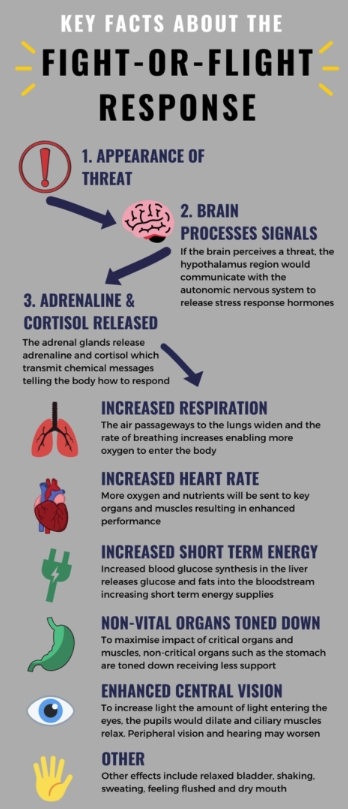
Our modern lives can be filled with, what it seems, a continuity of stress causing ‘battles’, which can be frequent and long-lasting, but which can also seem less serious, such as financial, marital issues, multi-tasking, job-related issues, worrying about other people’s lives, meddling in other people’s lives, etc. All this is set off even more by floods of ‘news’ and social media presence.
What is important here is that our bodies do not differentiate a real situation from the imagined one, so body response is going to be equal to a real situation or imagined one or thought of.
About 60-70% of all illnesses and health issues today are related to chronic stress. Chronic stress is linked to the six of the most common causes of death (heart disease, cancer, lung ailments, accidents, cirrhosis of liver and suicide).
 buddhna